
Find a Specialist
Ophthalmologists in Arizona
355 providers found
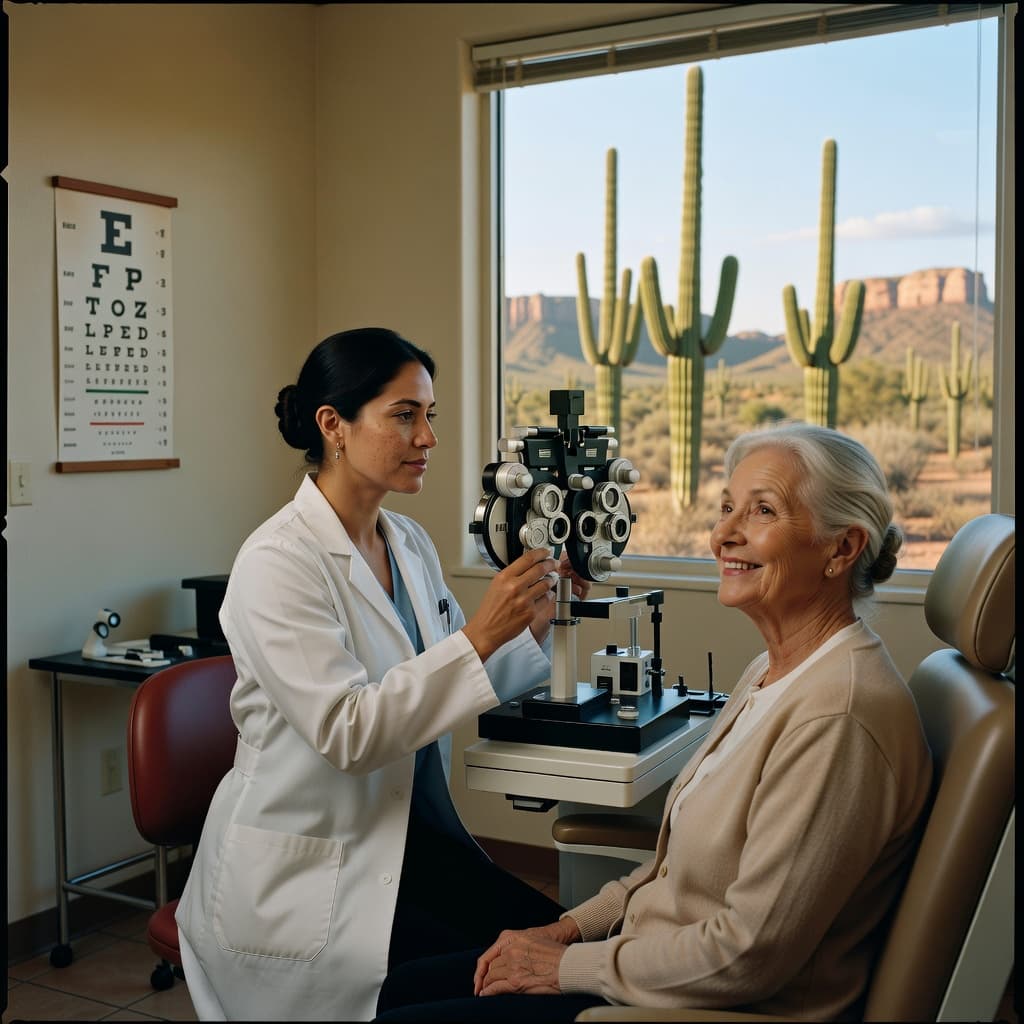
Arizona averages 299 sunny days per year, and your eyes absorb every one of them. The state's intense UV exposure, amplified by reflective desert terrain, drives cataract development faster than in most of the country. Phoenix ophthalmologists perform cataract surgery at rates well above the national per-capita average, and the pattern starts younger here than in cloudier states.
Dry eye is the other constant. Arizona's average humidity hovers around 20% for much of the year, and desert dust further irritates the ocular surface. Combine that with hours of air-conditioned indoor air, and tear film instability becomes one of the most common reasons Arizonans visit an eye specialist. Up in Flagstaff at 7,000 feet, the UV index climbs even higher while the air thins, creating a compounding risk for corneal damage and pterygium, the wing-shaped tissue growth that ophthalmologists here treat so frequently it carries the informal name "surfer's eye," earned in Arizona by hikers and outdoor workers instead.
Surprising detail: the Barrow Neurological Institute in Phoenix, best known for brain surgery, also houses a neuro-ophthalmology program that ranks among the top referral centers in the Southwest for optic nerve and visual pathway disorders.
From routine cataract evaluations in Sun City to complex retinal surgery at a Scottsdale surgical center, Arizona ophthalmologists practice in an environment that accelerates the conditions they treat.
Dr. AASIM KAMAL, M.D.
Ophthalmology
Accepting Patients
PHOENIX, AZ 85021
SpanishPanjabiUrduHindi
Frequently Asked Questions
Does living in Arizona accelerate cataract formation?
Research consistently links cumulative UV exposure to earlier cataract development, and Arizona delivers more annual UV than nearly any other state. Ophthalmologists here recommend UV-blocking sunglasses with wraparound coverage starting in childhood. If you have spent decades in Arizona without consistent eye protection, earlier screening, beginning at age 40, is worth discussing with your eye doctor.
Why is dry eye so common in Arizona?
Low humidity, persistent wind, airborne desert dust, and extended air conditioning use all destabilize the tear film. Arizona ophthalmologists frequently diagnose evaporative dry eye, where tears evaporate too quickly rather than being underproduced. Treatment ranges from preservative-free artificial tears and punctal plugs to newer options like intense pulsed light therapy for meibomian gland dysfunction.
Is UV exposure worse at higher elevations in northern Arizona?
Yes. UV intensity increases roughly 6 to 8% per 1,000 feet of elevation gain. Flagstaff sits at about 7,000 feet, meaning residents and visitors there face meaningfully stronger UV than the Phoenix valley floor. Ophthalmologists serving northern Arizona see higher rates of pterygium and photokeratitis, both directly linked to UV overexposure. Polarized, UV-400 rated lenses are essential year-round at elevation.