
Find a Specialist
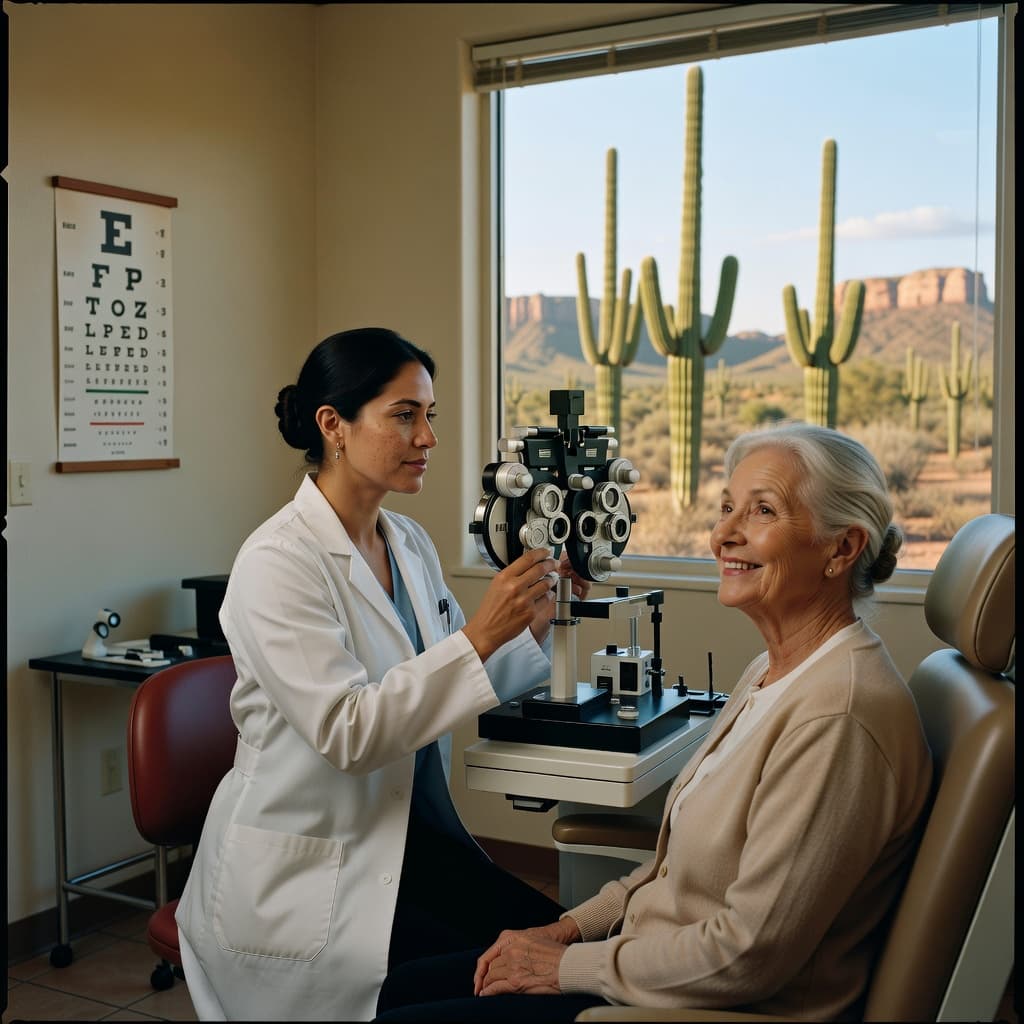
Eye Care Specialists in Arizona
355 providers found
Cataracts develop faster in high-altitude, high-UV environments. Arizona sits above 1,000 feet across most of its populated areas, with Flagstaff at 6,900 feet, and UV radiation at these elevations exceeds coastal levels by 10 to 15%. Combined with an aging population, Arizona ophthalmologists perform cataract extractions at volumes that consistently rank the state among the top per-capita surgical markets in the country. The Bascom Palmer Eye Institute network, Mayo Clinic in Phoenix, and Barrow Vision at St. Joseph's handle the highest-complexity cases, while the volume of routine cataract surgery supports dozens of ambulatory surgery centers across the metro.
Diabetic retinopathy is the second defining feature of Arizona ophthalmology. The state's elevated rates of type 2 diabetes, particularly in Native American communities and in Hispanic border communities, create a pipeline of preventable vision loss that eye care providers work against with screening programs and laser treatment. The Joslin Diabetes Center affiliate at Banner University and the University of Arizona's diabetic eye disease programs track complications in enrolled patients, but the challenge is reaching the unscreened population in rural and border communities before vision loss becomes irreversible.
The dry desert climate inflicts a burden on eyes that Arizonans often underestimate before arriving from humid climates. Dry eye disease, clinically termed keratoconjunctivitis sicca, is pervasive across Arizona's adult population, particularly after age 50. Phoenix's low relative humidity, frequently below 10% during spring, evaporates the tear film faster than the lacrimal glands can replenish it. Optometrists and ophthalmologists in Arizona manage dry eye as a near-universal complaint, and the market for prescription dry eye drops is among the most active in the country.
Specialties in Eye Care
Dr. AASIM KAMAL, M.D.
Ophthalmology
Accepting Patients
PHOENIX, AZ 85021
SpanishPanjabiUrduHindi
Frequently Asked Questions
What is the difference between an ophthalmologist and an optometrist?
Ophthalmologists are medical doctors (MD or DO) who completed a residency in ophthalmology. They can perform eye surgery, manage complex eye diseases, and prescribe medications. Optometrists hold a Doctor of Optometry (OD) degree and provide comprehensive eye exams, prescribe corrective lenses, diagnose common eye conditions, and in Arizona can prescribe a defined formulary of eye medications. Most routine eye care, glasses and contact lens prescriptions and annual exams, is managed by optometrists, with ophthalmology reserved for surgery and complex disease.
Why is dry eye so common in Arizona?
Arizona's desert climate, with relative humidity frequently below 15%, evaporates the tear film faster than the lacrimal glands can replace it. This is compounded by air conditioning in homes and cars, which further dries ambient air. Retirees and older adults are at higher risk because tear production decreases with age. Arizona ophthalmologists and optometrists treat dry eye as a near-universal complaint, managing it with artificial tears, prescription drops like cyclosporine or lifitegrast, punctal plugs, and intense pulsed light therapy.
Does UV exposure in Arizona accelerate cataract development?
Yes. Ultraviolet radiation is a well-established risk factor for cataract formation, and Arizona receives some of the highest annual UV doses in the country. Cumulative UV exposure over decades accelerates nuclear and cortical cataracts. Arizona ophthalmologists recommend UV-blocking sunglasses year-round, including for cloudy days when UV penetration remains significant. Cataracts diagnosed in the 60s and 70s in Arizona often reflect a lifetime of UV exposure that started well before protective eyewear was a cultural norm.
What diabetic eye disease screening is available in Arizona?
Dilated fundus exams and retinal photography for diabetic patients are available through both ophthalmologists and optometrists across Arizona. Banner University, the University of Arizona, and affiliated community health centers operate diabetic retinopathy screening programs for patients with diabetes. Teleophthalmology, using retinal cameras at primary care offices to capture images reviewed remotely by ophthalmologists, is expanding access to diabetic eye screening in FQHCs and rural clinics where specialist access is limited.
Is LASIK or other refractive surgery widely available in Arizona?
Yes. LASIK, PRK, and related refractive surgeries are offered by multiple ophthalmology practices across the Phoenix metro and Tucson. Arizona's large military population has created demand for PRK specifically, which is preferred over LASIK for active-duty personnel because it does not create a corneal flap that could be damaged in combat. The dry eye prevalence in Arizona is a clinical consideration for refractive surgery candidacy: surgeons typically require documented adequate tear production before proceeding, as LASIK can worsen pre-existing dry eye.